
Found, but not chosen.
How a therapy practice went from a website people could find to one they actually used.
The Problem
Mosaic had what initially looked like a search problem.
It wasn’t.
Several of the practice’s highest-value pages already ranked on page one of Google — including rates, contact, services, and scheduling — but click-through rates ranged from just 0.34% to 1%.
Behind the scenes, the website had another problem.
Each clinician’s information was being maintained manually across multiple places. Updating one therapist could require four or more separate edits.
The website had grown alongside the practice, but the system underneath it had not.
What I found
One of the most useful discoveries came from separating the practice’s search traffic.
60% of Mosaic’s search visibility came from horticulture and gardening-related searches, largely from people looking for educational information rather than therapy.
That audience clicked at just 0.38%.
The site's overall numbers therefore made the practice look less successful than it actually was.
The right response wasn’t “rank higher.”
It was to attract and convert more of the right people.
What I built
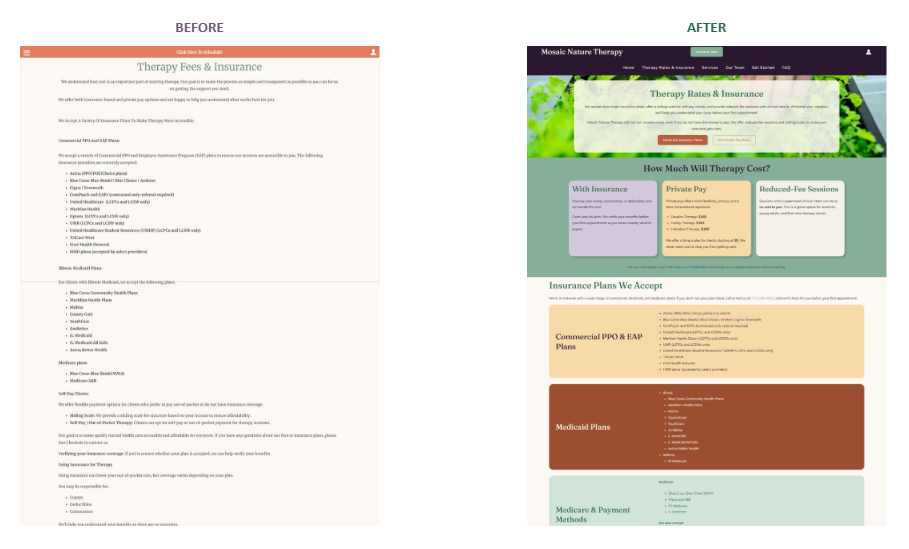
Structured clinician and service records so information is edited once and reused across the website.
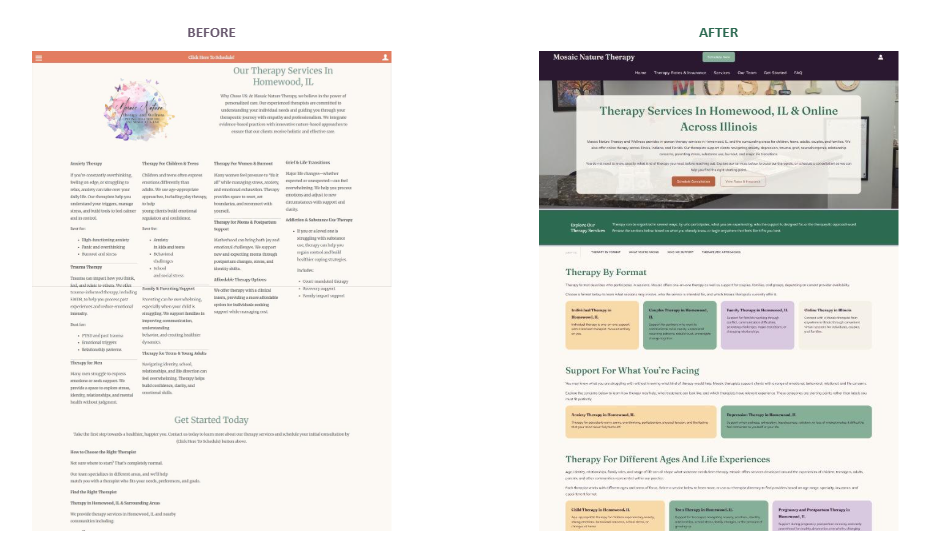
A searchable services library organized by format, concern, life stage, and approach.
A guided therapist matching tool using real specialties, availability, fees, and licensure.
Lead routing and tracking so each website inquiry has an owner and an outcome.
A simpler WordPress foundation, reducing the plugin stack from 26 to 9.
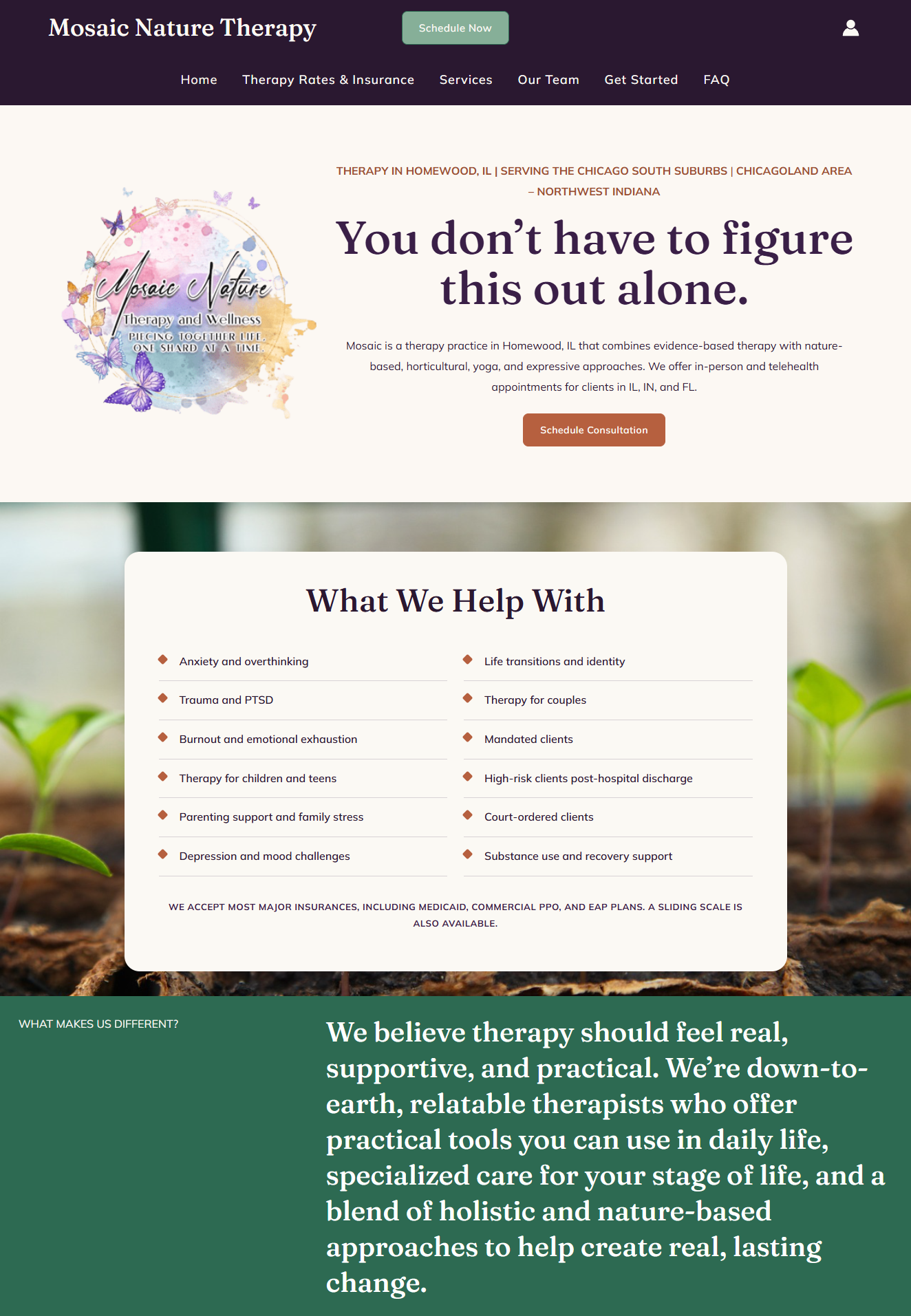
Dedicated service pages built around the actual searches prospective clients make.
I absolutely loved working with Amy. The changes she helped make will definitely make everyone’s life easier! Plus, referrals for my practice are higher than ever.
-- Rosa (Practice Owner)
The results speak for themselves.
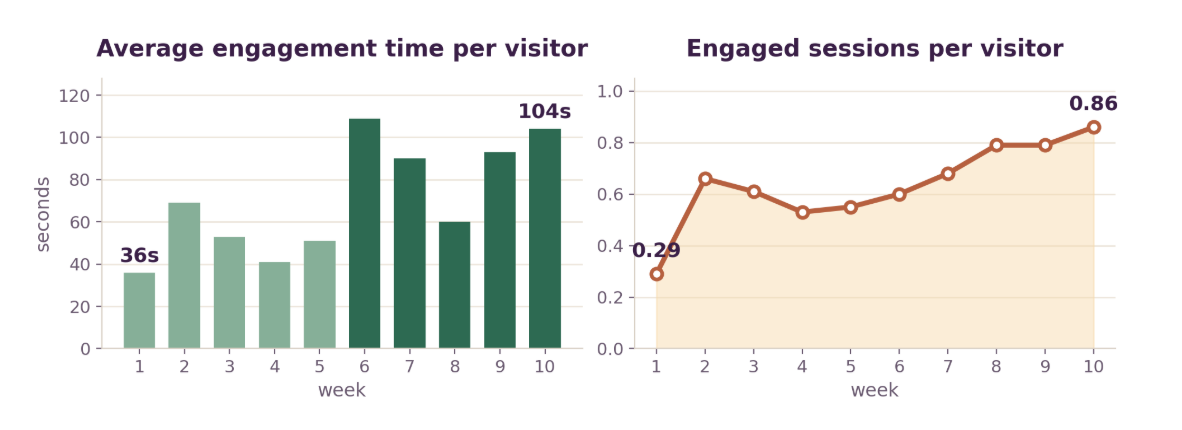
36 → 104 sec
average engagement time per visitor
4+ → 1
places to update one therapist
16
inquiries in the new form’s first 21 days
26 → 9
active plugins
Why it worked.
I started by figuring out what the practice actually needed.
My background spans technology product management, UX, writing, analytics, web development, and clinical counseling training.
That means I can think about both sides of the system:
the person seeking help and the practice providing it.